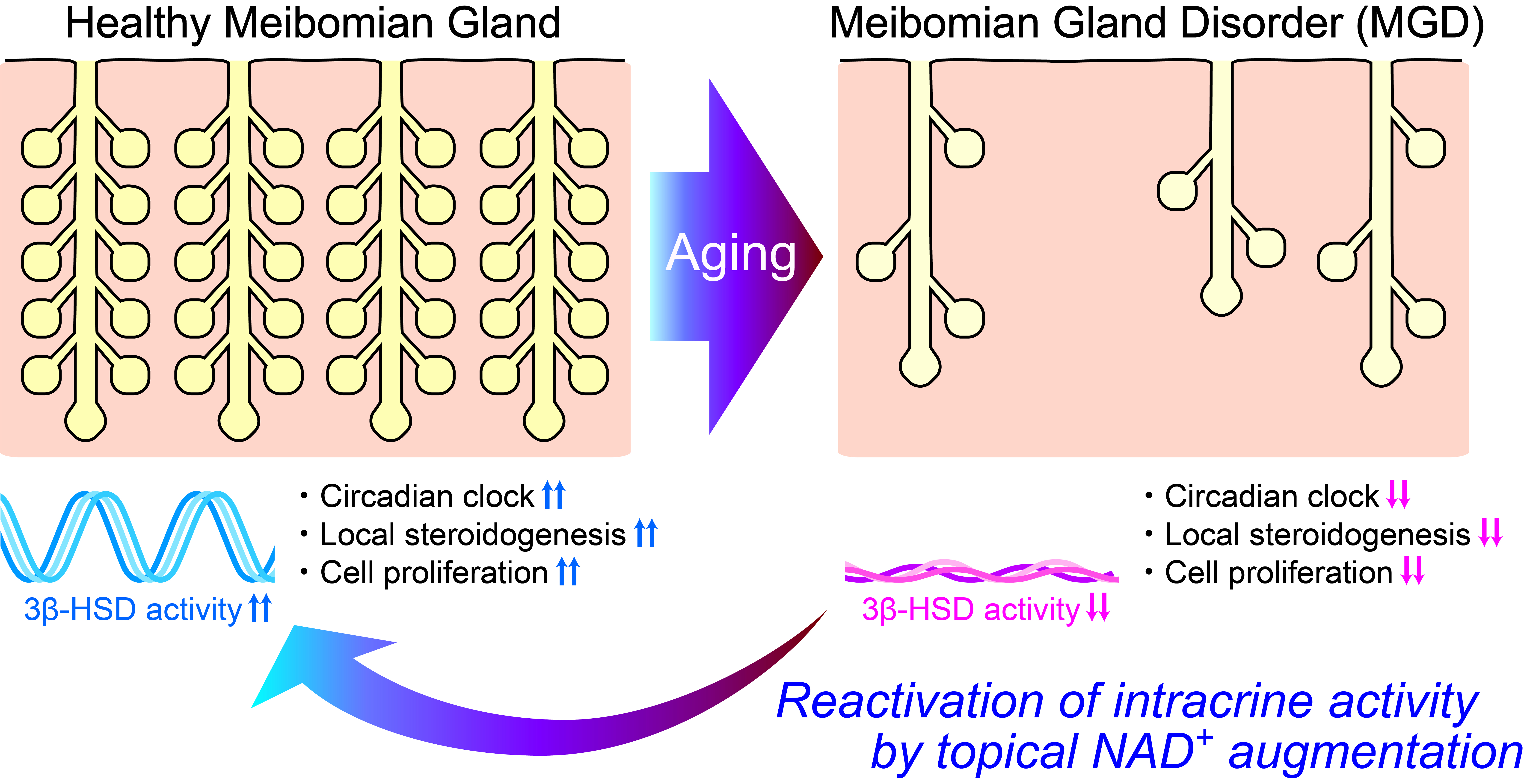
In this issue, Dr. Takahito Miyake and Dr. Masao Doi from Kyoto University contribute an attractive review introducing recent studies on the intracrine androgen metabolism of meibomian glands, which produce and secrete meibum, an oily substance to prevent the evaporation of the tear fluid. Both 3β-HSD and the androgen receptor express in meibomian glands. 3β-HSD activity exhibits daily rhythmicity that parallels fluctuations in nicotinamide adenine dinucleotide (NAD+), suggesting that NAD+- dependent metabolic processes contribute to temporal control of local androgen production. Age-related reductions in NAD+ availability may contribute to the impairment of local steroidogenic activity and causes meibomian glands dysfunction, including dry eye disease. These findings suggest that targeting NAD+ homeostasis may provide a novel therapeutic approach for the treatment of age-related dry eye disease. Our editorial team is confident that this fascinating review will provide readers with up-to-date knowledge on the androgen metabolism and its age-related changes in the meibomian glands.





Recommendation from the Editor
In this issue, Dr. Takahito Miyake and Dr. Masao Doi from Kyoto University contribute an attractive review introducing recent studies on the intracrine androgen metabolism of meibomian glands, which produce and secrete meibum, an oily substance to prevent the evaporation of the tear fluid. Both 3β-HSD and the androgen receptor express in meibomian glands. 3β-HSD activity exhibits daily rhythmicity that parallels fluctuations in nicotinamide adenine dinucleotide (NAD+), suggesting that NAD+- dependent metabolic processes contribute to temporal control of local androgen production. Age-related reductions in NAD+ availability may contribute to the impairment of local steroidogenic activity and causes meibomian glands dysfunction, including dry eye disease. These findings suggest that targeting NAD+ homeostasis may provide a novel therapeutic approach for the treatment of age-related dry eye disease. Our editorial team is confident that this fascinating review will provide readers with up-to-date knowledge on the androgen metabolism and its age-related changes in the meibomian glands.